
How to Create High-Converting Product Collections
Learn how to create effective product collections that boost engagement and conversion rates through smart organization and innovative tools.

Jakob, probably one of the most remarkable Webflow developers that has ever lived, created this stunning blog post and the highly engineered CMS in the background.

Did you know that 80% of visitors head straight to collection pages, and the top 5–10 pages account for over 50% of views? A well-designed collection not only improves shopping experiences but can also increase conversion rates by up to 400% with better user interfaces.
Key Takeaways:
Quick Comparison: Shopify vs. Centra
Feature
Shopify
Centra
Collection Types
Smart & Manual
Dynamic Displays
Add-to-Cart Speed
490ms
125ms
Localization
Limited
Multi-market support
Design Flexibility
Basic CMS
Headless architecture
How to optimize your Shop Store
Building Product Collections That Convert
Did you know that 80% of visitors go straight to collection pages? Even more striking, the top 5–10 collection pages account for over 50% of all views.
Shopify and Centra Collection Tools
Centra's fashion platform stands out with an average add-to-cart time of just 125ms, compared to Shopify's 490ms. Each platform has its own strengths, as shown below:
Feature
Shopify
Centra
Collection Types
Smart and Manual
Dynamic Displays
Localization
Limited options
Multiple markets and currencies
Product Management
Limited variant support
Unlimited variants
Performance Speed
490ms add-to-cart
125ms add-to-cart
Design Flexibility
Basic CMS
Headless architecture
Centra's Displays feature allows fashion brands to showcase products differently across various channels while keeping inventory management consistent. This is especially useful for brands with complex merchandising strategies. Once you've selected a platform, the next step is refining product organization to increase clicks and conversions.
Organizing for Conversions
Products in the first 10 positions of a collection page get 10 times more clicks than those ranked 100 or lower. To maximize visibility and engagement:
For example, Boston General Store saw improved merchandising efficiency and product discovery after implementing Entaice's AI sorting tool in September 2024. This system automatically optimizes product placement based on real-time sales and inventory data. A well-organized collection also makes naming more effective - let's explore how clear names can drive both searchability and sales.
Writing Effective Collection Names
Urban Cachet's October 2022 experience highlighted the impact of clear naming and strategic organization on sales.
To craft effective collection names:
Keep in mind, users spend 57% of their viewing time above the fold. Collection pages with a view-through rate above 40% usually meet customer expectations, while those below 25% may need reorganization.
Visual Merchandising Tools and Techniques
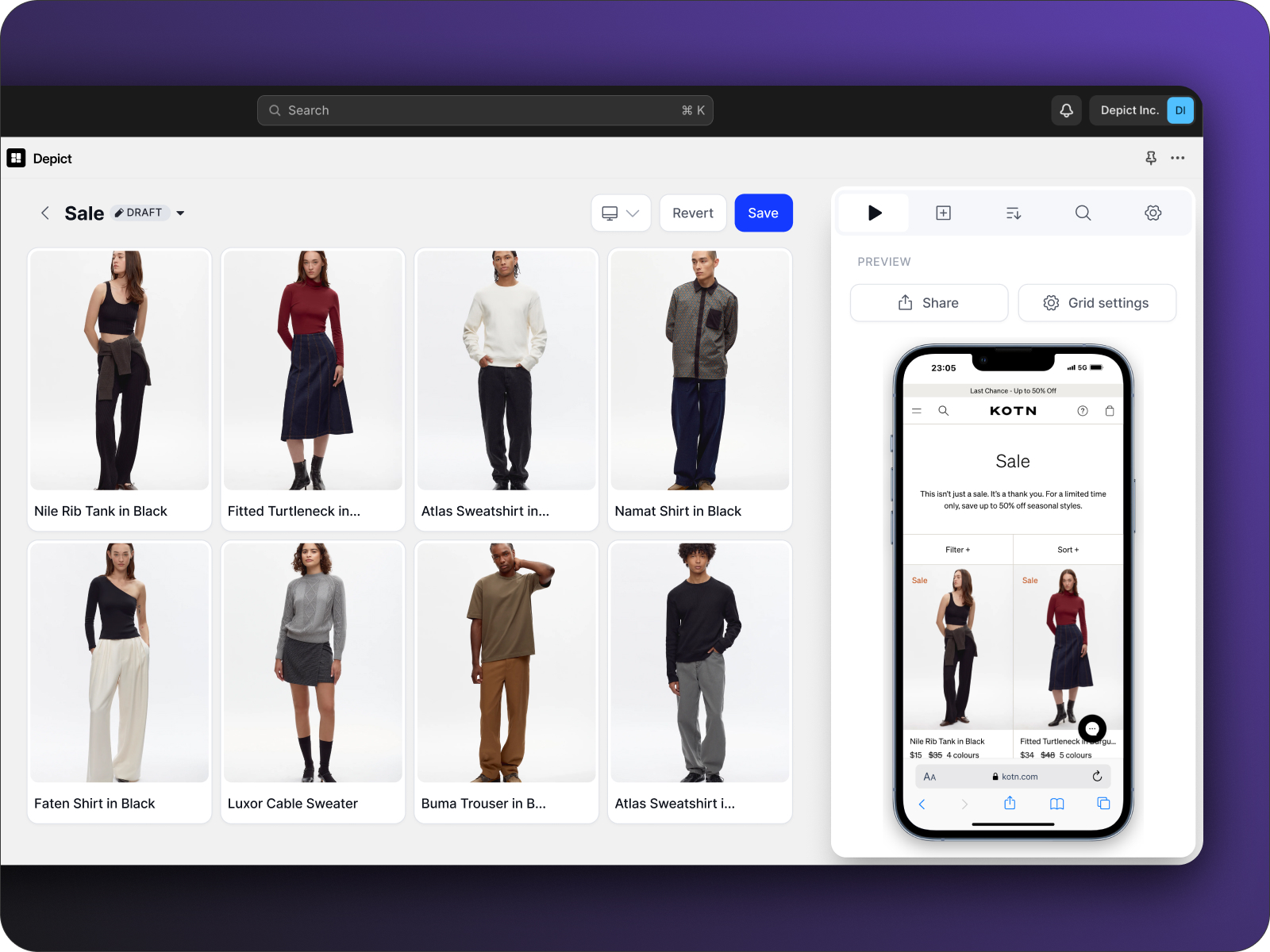
Create Custom Grids Without Coding Using Depict

Gone are the days of manually arranging products. With Depict's no-code platform, fashion and lifestyle brands can design custom collection grids without needing technical skills. Its drag-and-drop interface allows merchandisers to craft visually engaging layouts while keeping performance in check.
"A game-changer compared to standard Shopify collections, we're operating at lightning speeds across 6 stores." - Lukas Jensen, Ecomm at Ilse Jacobsen
The right tools can save time and boost efficiency. Hanny Eldblom, Head of Ecommerce, shared their experience with Depict: "A lifesaving app. We saved 40% of our time every month." These streamlined layouts pave the way for better product sorting strategies.
Smart Product Sorting for Better Conversions
Once your grid is ready, smart sorting can help maximize conversions. Here are some sorting strategies and their benefits:
Sorting Parameter
Purpose
Impact
Bestsellers First
Highlights top-performing items
Boosts conversion rates
New Arrivals
Adds a sense of urgency
Encourages repeat visits
Stock Status
Avoids frustration
Reduces bounce rates
Seasonal Relevance
Aligns with customer intent
Enhances engagement
Real-world examples show how sorting strategies can transform workflows. Kotn's ecommerce team, for instance, automated their merchandising process. Gabriela Gallner remarked, "We're witnessing a substantial improvement in our workflow, tasks that used to take hours are now fully automated."
Brands like Interior Define use icon-based filters to simplify navigation. Similarly, Allbirds keeps active filter options visible at the top of the filter column, making it clear to shoppers which filters are applied.
Preview and Test Changes Before Publishing
Always test updates thoroughly before going live. Depict makes it easy with instant side-by-side previews of how collections will look on both desktop and mobile, complete with key product, stock, and sales data.
Key steps for testing:
For major updates, consider using a separate development shop. This ensures your live store remains unaffected while you validate new designs and menu changes.
"Instantly see what your shoppers will see with a live side-by-side preview of your storefront, with key product, stock & sales data at your fingertips." - Depict
sbb-itb-0f37a8d
Collection Automation and Management
Automated Collection Rules
Shopify's smart collections simplify product organization using automated rules. You can set up to 60 conditions to include or exclude products based on specific criteria, keeping collections up-to-date without manual effort.
Here are some useful automation rules:
Rule Type
Purpose
Impact
Inventory Status
Hide out-of-stock items
Minimizes customer frustration
Price Range
Group products by price tier
Enhances shopping experience
Product Tags
Auto-sort by category or season
Keeps collections timely and relevant
Gross Profit
Sort by profit per impression
Maximizes revenue opportunities
For example, a condition like "Inventory stock is greater than 0" ensures only available products are displayed to customers. These rules create a solid foundation for managing collections efficiently, especially during seasonal shifts.
Managing Seasonal Collections
Seasonal collections benefit greatly from data-driven planning. By analyzing historical sales and purchasing trends, AI tools can help retailers predict upcoming demands. This allows businesses to prepare collections in advance for peak seasons, which can account for up to 40% of annual sales.
"Seasonal content should feel natural and relevant to your audience! AI helps nail timing and relevance but your human touch makes everything sparkle".
Key strategies for seasonal collections include:
AI Collection Recommendations
AI-powered tools take collection curation to the next level. They can speed up the process by 13%, improve product selection by 30%, boost engagement by 40%, and reduce bounce rates by 40%.
Take Sapphire, a Pakistani fashion retailer, as an example. By using Insider's Smart Recommender, they achieved a 12X ROI by improving product discovery and streamlining the browsing process.
AI can also personalize collections by analyzing customer behavior, creating themed groupings that resonate with different segments. This approach drives 44% of repeat purchases globally.
To make the most of AI recommendations, focus on:
Collection Performance Analysis
Improving collection performance relies on analyzing key metrics and making informed adjustments. Here's a breakdown of the most important metrics to track:
Metric
Description
Target
Percentage of visitors who make a purchase from the collection
Over 3% (industry average)
Average purchase amount from collection pages
Varies by industry
Percentage of visitors leaving without interaction
Below 40%
Percentage of visitors clicking on collection items
Over 15%
Average time visitors browse collection pages
2–4 minutes
Use your analytics tools to track these metrics and identify areas for improvement.
Collection A/B Testing
Experimenting with collection layouts can lead to better results. Tools like Depict.ai's custom grid builder let you test different elements, such as product sorting, image sizes, grid configurations, filter positions, and page load speeds.
A great example comes from Socium Media, which tested variations in product titles. By moving brand names from the start to the end of titles, they achieved a 25% higher return on ad spend and 10% lower cost-per-click within 30 days. For accurate results, test one element at a time. Combine these findings with customer feedback to refine your collection strategy further.
Customer Feedback Integration
"Integrating customer feedback into your product development process is about fostering a deeper connection with your users and crafting products that truly resonate with their needs and desires".
Gather feedback through surveys, support tickets, social media, user behavior analytics, and direct customer interactions.
Depict's collection analytics feature can help you identify problem areas, such as navigation issues or low product discovery rates. Using this feedback alongside performance data ensures your collections align with customer expectations and maintain strong conversion rates.
Conclusion: Improving Collections for Better Sales
Creating high-performing collections requires a mix of technical know-how and a deep understanding of your customers. By refining designs, integrating helpful tools, and consistently improving, brands can craft collections that truly stand out. Leading companies succeed by organizing their collections clearly and fine-tuning them regularly.
Quick Implementation Guide
Here are some practical steps to upgrade your collections:
Action Item
Implementation Example
Impact
uses high-quality images and easy-to-navigate layouts to make products easier to find.
Boosts product discovery
’s responsive design and fast-loading images create a smooth mobile shopping experience.
Enhances mobile usability
simplifies its menu for more straightforward browsing.
Improves user experience
automates inventory displays with smart rules.
Saves time and effort
"Everything stems back to your audience and telling a story that matters to them. Do your homework to understand your consumers and learn who they are, what their motivations are, and what matters to them." - Maria Bonello, Director of Strategy at SMAKK Studios
Combine these strategies with the right platforms to maximize results.
Tools and Resources
The following platforms can help you apply these strategies effectively:
Shopify Collections Suite
Centra for Fashion Brands
Depict's Collection Tools
Related Blog Posts
- 10 Best Practices for Fashion Store Product Grid Design
- Common Product Grid Issues and How to Fix Them