
What gets automated, and what stays yours
Every store online is starting to look the same, and AI is why. Our CEO Josep on the fix: let AI automate the repetitive work of keeping a store running, and keep the decisions that make your brand distinct in human hands.
By Josep Nolla
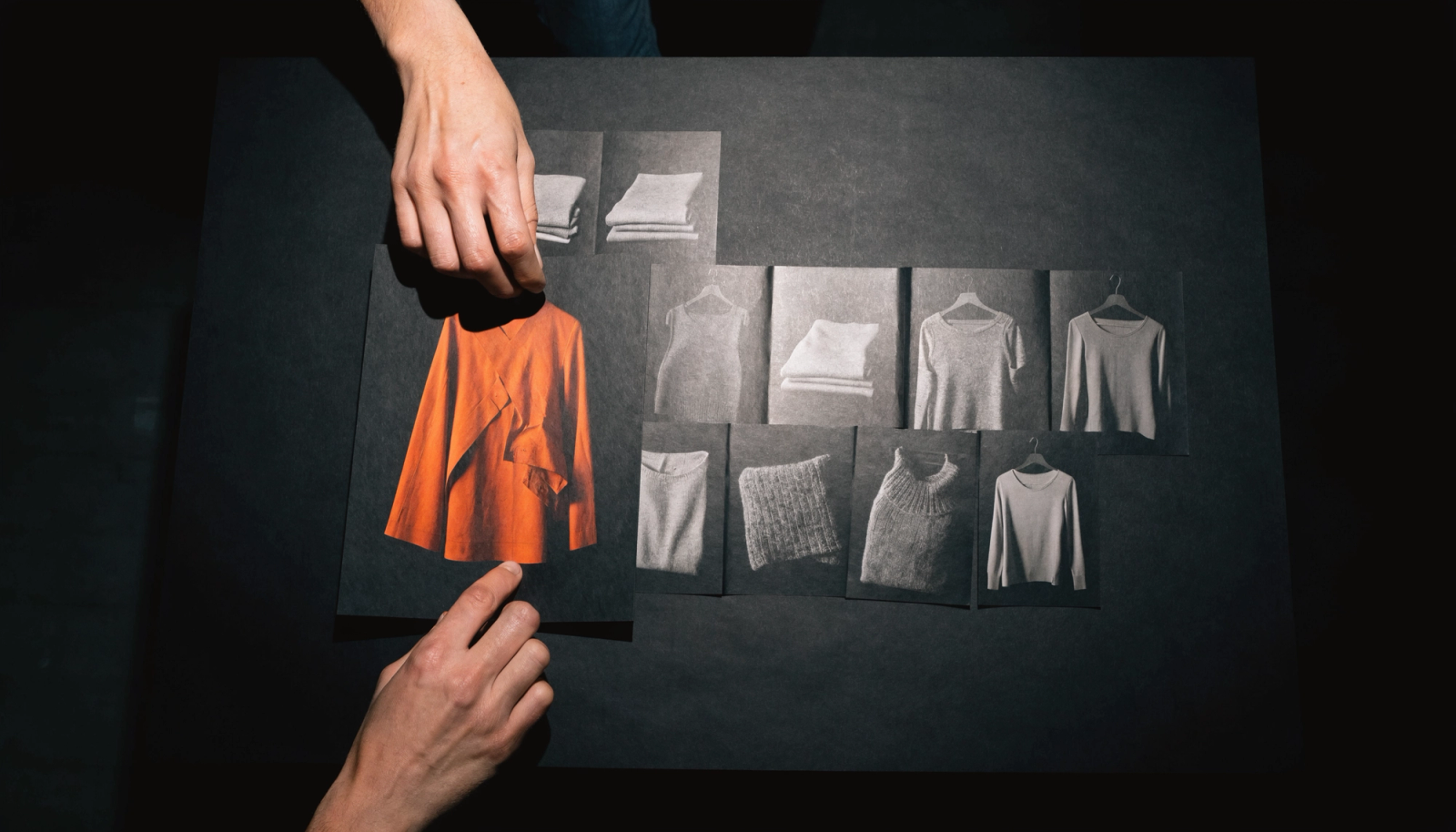
Everyone has AI now. And it shows, mostly in a good way. Product copy is cleaner, translations are better, sites ship faster. The baseline quality of ecommerce has genuinely gone up in the last two years.
But something else happened at the same time. Browse fifty storefronts and you start to feel it. Everything is good, and everything is the same. AI-generated imagery you can spot from across the room. Descriptions that read like they came from the same writer, because in a sense they did. The tools that raised the floor are quietly lowering the ceiling. We're heading toward an internet where every store is competent and no store is interesting.
Here's the thing though: the problem isn't AI. It's what the AI is being asked to do.
Take TOTEME. The Stockholm fashion house is one of the teams I most admire working right now: an exact point of view, carried into every detail, and the discipline to keep it that way while they grow. Part of what makes them interesting to us is how they treat their storefront. It is not the same store everywhere. A shopper opening TOTEME in Seoul does not see what a shopper in Stockholm sees: different products surface, in a different order, because what resonates shifts with the market, the season, the climate. A Stockholm winter is not a Seoul winter, and an assortment that leads in one lands differently in the other. As TOTEME has grown its presence in South Korea, that per-market precision has mattered more, not less.
And this is the part I care about: those are decisions. Someone at TOTEME chooses how the brand shows up in each market, and Depict's merchandising carries those choices through the storefront. No algorithm optimizing for the average shopper would arrive at them, because the average shopper does not exist. A system tuned to the average would show everyone the same bestsellers and call it relevance. TOTEME runs the opposite way, and it is why their store feels like them wherever you open it: the more deliberately they decide who sees what, the more the brand comes through.
There's a version of this argument from our own house. Our new website was built almost entirely with agentic coding. Changes that used to take weeks (aligning tone across dozens of pages, restructuring navigation) now take an afternoon. And nobody can tell. It doesn't look AI-made, because it isn't AI-decided. Every choice about what the site says and how it looks was a human choice; the AI executed it at a speed no team could match. That's the distinction that matters: AI as an executor of taste versus AI as a substitute for it. The first makes distinctive work cheaper. The second makes all work identical.
Merchandising has exactly this split running through it. Some of the work has a right answer and no brand judgment in it at all. A red umbrella showing up in search results for "black shoes" is just wrong. There's nothing to curate, nothing to deliberate. At catalog scale this kind of work is endless and mind-numbing, which is why, honestly, it mostly doesn't get done. It should be automated completely, and no one will miss it.
And some of the work is the brand. Which products lead a collection? What a search grid looks like for an image-led label? Whether a thumbnail should be a packshot or a lifestyle shot? These decisions are the difference between a store with a point of view and a store that's merely well-organized, and they should never be made by a system optimizing toward the average.
Everything we're shipping in the second half of 2026 follows from taking that split seriously. Our new agent fixes the hygiene problems on its own and proposes anything that touches how your brand shows up: you approve it or you don't. Our rebuilt analytics don't just show you charts; they tell you what's underperforming and hand you the fix. Our search gives you more explicit control over results, not less. And you'll be able to run all of it in plain language, through whatever AI assistant your team already uses.
One more prediction, because I think it's already inevitable: all of this work becomes agentic. Not because it's fashionable, but because when a way of working is dramatically faster, dramatically cheaper, and just as good, gravity takes over. Every merchandising team will eventually work this way. The question that actually matters is what the agents are optimizing for. Optimizing toward the average is a race everyone loses at once.
We're building the other kind: AI that handles the mundane and amplifies what's distinct about you. Merchandising for brand-led commerce.
The full roadmap for the second half of 2026 is here: the Depict H2 2026 public roadmap.